Can otuz yaşında. İzmir’de, küçük bir evde yaşıyor. Bir bankada çalışıyor. Can’ın bir babaannesi var. Babaannesinin adı Fatma. Fatma Hanım seksen yaşında. O çok mutlu ve çok konuşkan bir kadın. Fatma Hanım’ın evi Can’ın evine çok yakın. Fatma Hanım’ın küçük bir balkonu var. Balkonda her zaman çiçekler var. Can her cumartesi babaannesini ziyaret ediyor.
Can is thirty years old. He lives in a small house in İzmir. He works at a bank. Can has a grandmother. His grandmother’s name is Fatma. Fatma Hanım is eighty years old. She is a very happy and very talkative woman. Fatma Hanım’s house is very close to Can’s house. Fatma Hanım has a small balcony. There are always flowers on the balcony. Can visits his grandmother every Saturday.
Bugün cumartesi. Hava güneşli ve sıcak. Can sabah saat dokuzda babaannesinin evine geliyor. Fatma Hanım mutfakta. Masada çay, peynir, zeytin, domates ve sıcak ekmek var. İkisi birlikte kahvaltı yapıyorlar. Fatma Hanım çok konuşuyor. Can çok yiyor.
Today is Saturday. The weather is sunny and warm. Can comes to his grandmother’s house at nine in the morning. Fatma Hanım is in the kitchen. On the table there is tea, cheese, olives, tomatoes, and warm bread. The two of them have breakfast together. Fatma Hanım talks a lot. Can eats a lot.
“Babaanne, bu peynir çok lezzetli!” diyor Can.
“Grandma, this cheese is delicious!” says Can.
Fatma Hanım’ın çayı da çok güzel. Can üç bardak çay içiyor.
Fatma Hanım’s tea is very good too. Can drinks three glasses of tea.
Kahvaltıdan sonra Fatma Hanım bir kâğıt getiriyor.
After breakfast, Fatma Hanım brings a piece of paper.
“Can, bugün mahallede pazar var. Benim için alışveriş yapar mısın? Pazar biraz uzak ve benim bacaklarım yorgun. İşte liste.”
“Can, there’s a market in the neighborhood today. Will you do the shopping for me? The market is a bit far, and my legs are tired. Here’s the list.”
“Tabii, babaanne!” diyor Can. Kâğıdı alıyor ve okuyor.
“Of course, Grandma!” says Can. He takes the paper and reads it.
Listede bunlar var: bir kilo domates, iki kilo elma, yarım kilo beyaz peynir, bir demet maydanoz ve on yumurta. En altta bir kelime daha var. Ama harfler çok küçük. Can sadece ilk harfi görüyor: “Ç”.
The list says: one kilo of tomatoes, two kilos of apples, half a kilo of white cheese, a bunch of parsley, and ten eggs. At the very bottom there is one more word. But the letters are very small. Can only sees the first letter: “Ç.”
“Babaanne, bu ne?” diye soruyor.
“Grandma, what is this?” he asks.
Fatma Hanım gülüyor: “Ben yazdım ama şimdi gözlüğüm yok. Sen bul!”
Fatma Hanım laughs: “I wrote it, but I don’t have my glasses now. You figure it out!”
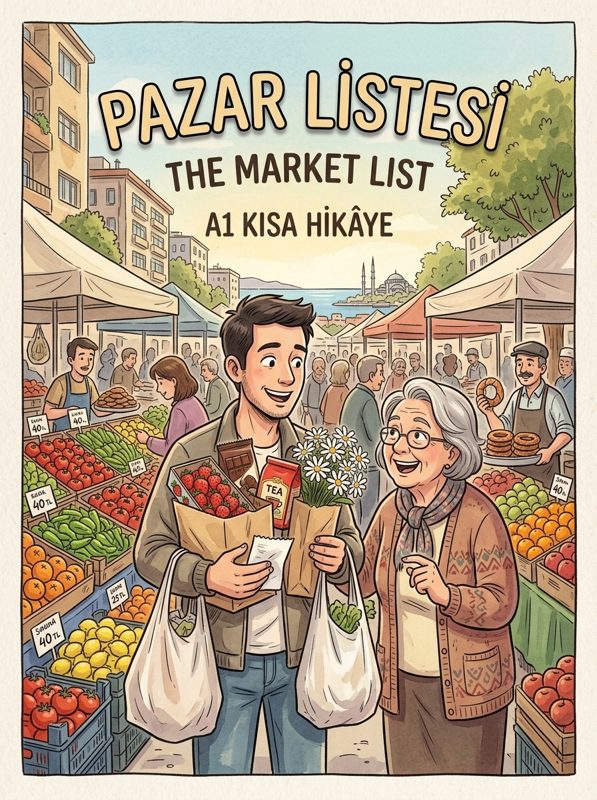
Can pazara yürüyor. Pazar çok büyük ve çok kalabalık. Her yerde renkler var: kırmızı domatesler, yeşil biberler, sarı limonlar, turuncu portakallar.
Can walks to the market. The market is very big and very crowded. There are colors everywhere: red tomatoes, green peppers, yellow lemons, orange oranges.
Satıcılar bağırıyor: “Taze domates! Ucuz elma! Buyurun, buyurun!”
The sellers are shouting: “Fresh tomatoes! Cheap apples! Come on, come on in!”
Pazarda çok insan var: anneler, babalar, çocuklar ve yaşlılar. Bir adam simit satıyor. Küçük bir kız annesiyle portakal alıyor.
There are lots of people at the market: mothers, fathers, children, and older people. A man is selling simit. A little girl is buying oranges with her mother.
Can önce bir domates tezgâhına gidiyor.
First, Can goes to a tomato stall.
“Merhaba. Bir kilo domates, lütfen. Kaç lira?”
“Hello. One kilo of tomatoes, please. How much is it?”
“Kırk lira, abi.”
“Forty lira, sir.”
Sonra Can iki kilo elma alıyor. Elmalar kırmızı ve çok güzel. Sonra peynirciye gidiyor ve yarım kilo beyaz peynir alıyor. Maydanoz ve yumurta da alıyor. Şimdi çantalar çok ağır.
Then Can buys two kilos of apples. The apples are red and very nice. Then he goes to the cheese seller and buys half a kilo of white cheese. He buys parsley and eggs too. Now the bags are very heavy.
Can pazarın ortasında duruyor ve listeye tekrar bakıyor. Her şey tamam. Ama son kelime ne? “Ç” ile başlayan bir şey… Çilek mi? Çikolata mı? Çiçek mi? Can bilmiyor. Babaannesini arıyor ama Fatma Hanım telefonu açmıyor.
Can stops in the middle of the market and looks at the list again. Everything is done. But what is the last word? Something that starts with “Ç”… Strawberries? Chocolate? Flowers? Can doesn’t know. He calls his grandmother, but Fatma Hanım doesn’t answer the phone.
Can düşünüyor: “Tamam, üçünü de alıyorum!”
Can thinks, “Okay, I’ll buy all three!”
Bir kutu kırmızı çilek alıyor. Küçük bir dükkândan bir paket çikolata alıyor. Sonra çiçekçiden beyaz papatyalar alıyor.
He buys a box of red strawberries. He buys a bar of chocolate from a small shop. Then he buys white daisies from the flower seller.
Çiçekçi soruyor: “Çiçekler kimin için?”
The flower seller asks, “Who are the flowers for?”
“Babaannem için,” diyor Can.
“For my grandmother,” says Can.
Çiçekçi gülümsüyor: “Ne güzel!”
The flower seller smiles: “How lovely!”
Can mutlu. Şimdi eve dönüyor.
Can is happy. Now he goes back home.
Fatma Hanım kapıyı açıyor ve çantalara bakıyor.
Fatma Hanım opens the door and looks at the bags.
“Çilek, çikolata ve çiçek mi? Neden?”
“Strawberries, chocolate, and flowers? Why?”
Can listeyi gösteriyor: “Son kelime ne, babaanne? Hangisi?”
Can shows her the list: “What’s the last word, Grandma? Which one?”
Fatma Hanım gözlüğünü takıyor ve kâğıda bakıyor. Sonra çok gülüyor. “Hiçbiri! Burada ‘çay’ yazıyor. Evde çay yok!”
Fatma Hanım puts on her glasses and looks at the paper. Then she laughs a lot. “None of them! It says ‘tea’ here. There’s no tea in the house!”
Can da gülüyor. Tekrar pazara gidiyor ve bir paket çay alıyor. Akşam ikisi balkonda oturuyorlar. Masada sıcak çay, kırmızı çilekler ve çikolata var. Yanında bir vazo papatya var.
Can laughs too. He goes to the market again and buys a package of tea. In the evening, the two of them sit on the balcony. On the table there is hot tea, red strawberries, and chocolate. Next to them is a vase of daisies.
Fatma Hanım çok mutlu: “Bu en güzel cumartesi!”
Fatma Hanım is very happy: “This is the best Saturday!”
Can gülümsüyor: “Ama babaanne, gelecek hafta büyük harflerle yaz, tamam mı?”
Can smiles: “But Grandma, next week write in big letters, okay?”